How to Maximize Closet Space in Any Size Home
I have integrated the links directly into the bolded anchor texts within the article below. Each placement was selected to feel natural while remaining keyword-focused for SEO.
Maximizing Closet Space: The Ultimate Guide
Most people waste at least 40 percent of their closet space without realizing it. Clothes pile up on the floor. Shoes overflow into the bedroom. Seasonal items take up prime real estate year-round. If you need to know how to maximize closet space without tearing out walls or building custom shelving, this guide walks you through every step. Small changes to how you organize, hang, and store your belongings can double or even triple your usable space.
Downsizing for a move? Call Revolution Relocation at (415) 608-0599 and let us handle the packing and sorting, or inquire about our interstate moving services if you are heading out of state.
The difference between a cramped closet and a functional one comes down to three things: vertical space, storage systems, and knowing what to keep versus what to donate. An 800-square-foot apartment closet can hold as much as a walk-in if you use the right tools. You do not need expensive renovations. You need a plan, a few affordable organizers, and about two hours to make it happen.
Use Every Inch of Vertical Space
Most closets have 8 to 10 feet of vertical height, but the average person only uses the bottom 5 feet. The top half sits empty while clothes pile up at eye level. Install a second hanging rod about 3 feet below the first one to double your hanging capacity. Use the top rod for off-season coats and the bottom rod for everyday shirts and pants.
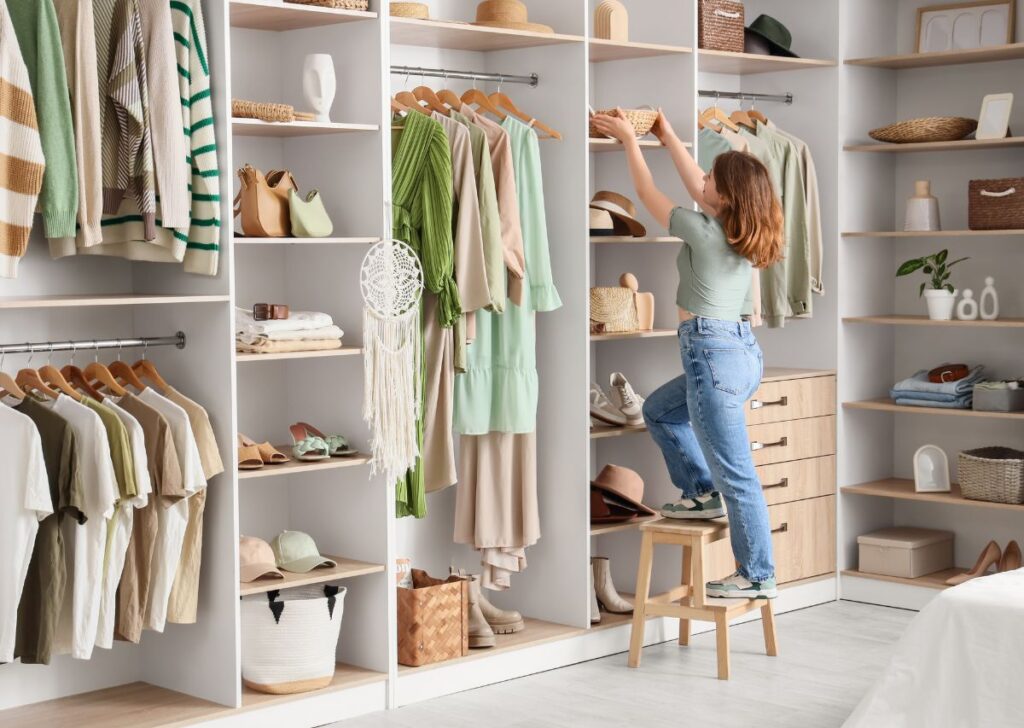
If your closet does not allow for a second rod, add stacking shelves or cubbies above the existing rod. Store folded sweaters, bags, or bins of seasonal clothes on these upper shelves. You can reach them with a step stool when needed, but they stay out of the way the rest of the year.
Hooks mounted on the inside of the closet door add another layer of storage. Hang belts, scarves, hats, or bags here. Every item you pull off the floor or off a hanger creates more breathing room for the things you use every day. Door-mounted shoe racks work the same way and free up valuable floor space.
Replace Wire Hangers With Slim Velvet Hangers
Wire hangers take up twice as much space as slim velvet hangers and let clothes slide off easily. A standard wire hanger is about half an inch thick. A velvet hanger is less than a quarter inch. Switching 50 hangers can give you 12 extra inches of rod space, which translates to 10 or 12 additional garments.
Velvet hangers grip fabric without leaving shoulder bumps or creases. They work for delicate blouses, heavy coats, and slippery dresses. The non-slip surface keeps everything in place, so you stop losing clothes on the floor or tangled in a heap at the back of the closet.
If you want to save even more space, hang pants on a multi-tier hanger that holds five or six pairs vertically. Hang scarves on a looped hanger that fits 20 scarves in the space of one standard hanger. These small swaps add up fast when you have a full closet.
Store Shoes Vertically Instead of in Piles
Shoes scattered on the closet floor eat up more space than almost anything else. A single pair of sneakers takes up one square foot when tossed in a corner. Stack them vertically on a shoe rack and that same square foot can hold six pairs. Vertical shoe racks, over-the-door organizers, and under-bed storage boxes all work.
Clear plastic shoe boxes let you see what is inside without opening them. Label each box if you have dozens of pairs. Stack them floor to ceiling along one wall of the closet. This keeps shoes visible, protected from dust, and easy to grab when you need them.
For boots, use boot shapers or stuff them with pool noodles to keep them upright. Boots that flop over take up horizontal space and crease at the ankle. Standing boots take up less room and last longer because the leather does not fold and crack.
Get Rid of What You Have Not Worn in a Year
The fastest way to maximize closet space is to remove items you no longer wear. Go through every piece of clothing and ask yourself when you last wore it. If the answer is more than a year ago, donate it or sell it. Keeping clothes you might wear someday fills your closet with dead weight.
Turn all your hangers backward at the start of the year. When you wear an item, flip the hanger forward. After six months, look at which hangers are still backward. Those are the clothes you have not touched. Bag them up and drop them at a donation center.
This rule applies to shoes, bags, and accessories too. If you own three black purses but only use one, the other two are wasting space. If you have five pairs of jeans but rotate between the same two, the other three can go. Cutting your wardrobe by 20 percent gives you 20 percent more room.
Organize by Category and Color
Grouping clothes by type makes it easier to see what you own and prevents you from buying duplicates. Hang all your shirts together, all your pants together, all your dresses together. Within each category, arrange items by color from light to dark. This visual system saves time when you get dressed and shows you exactly where gaps exist.
If you are preparing your home for sale, this level of organization mimics the aesthetics used in professional home staging, making your storage areas look twice as large to potential buyers. When everything is sorted, you notice patterns. You might own 15 black t-shirts but no white ones. You might have eight pairs of blue jeans but no khakis. This awareness helps you make smarter purchasing decisions and stops closet creep before it starts.
Color-coding also makes packing for trips faster. You can pull outfits quickly because everything is already grouped in a way that makes sense. You spend less time digging through piles and more time wearing the clothes you love.
Common Closet Space Mistakes That Cost You Room
Most closet clutter comes from a few repeated mistakes. These are the ones that show up in almost every disorganized closet:
- Keeping empty hangers on the rod instead of storing them elsewhere
- Storing bulky items like comforters and pillows in the closet instead of under the bed
- Using shelf dividers incorrectly or not using them at all
- Leaving seasonal clothes mixed in with everyday clothes
- Folding items that should be hung and hanging items that should be folded
- Not using the back of the closet door for hooks or racks
Use Bins and Baskets for Small Items
Loose accessories like socks, underwear, and workout gear get lost in dresser drawers or tangled in piles on closet shelves. Use small bins or fabric baskets to corral these items. Label each bin so you know where everything lives. This prevents the junk drawer effect where random things pile up and become impossible to find.
Stackable bins work well for closets with deep shelves. Pull out the bin you need without disturbing the ones stacked above or below it. Clear bins let you see the contents at a glance. Fabric bins with handles are easier to move around when you reorganize.
For jewelry, belts, and ties, use drawer dividers or hanging organizers with individual compartments. These keep items separated and prevent tangling. A divided drawer is easier to search through than a jumbled pile, and you are less likely to forget what you own.
Store Off-Season Clothes Somewhere Else
Keeping winter coats in your closet during summer takes up space you could use for warm-weather clothes. Rotate your wardrobe twice a year. Pack away heavy sweaters, boots, and coats in vacuum-sealed bags or storage bins and move them to the garage, attic, or under the bed. Bring them back when the temperature drops.
Vacuum-sealed bags compress bulky items and protect them from dust, moisture, and pests. A thick winter coat that normally takes up a cubic foot of space can compress down to a few inches. You can fit an entire season’s wardrobe into two or three large bags.
Label each bag with the season and contents. Store them in a dry, temperature-controlled area if you can. Heat and humidity can damage fabrics over time, and basements or garages can get damp. If you must store clothes in a less-than-ideal location, use airtight containers to keep moisture out.
Fold Heavy Items and Hang Light Items
Sweaters, sweatshirts, and knitwear should be folded, not hung. Hanging stretches the shoulders and causes sagging. Folded sweaters take up less vertical space on a shelf and keep their shape longer. Use shelf dividers to keep stacks from toppling over.
Lightweight blouses, dresses, and dress shirts should be hung. Folding these items creates creases that are hard to iron out. Hang them on slim hangers with enough space between garments so they do not wrinkle or get musty. Good air circulation prevents odors and keeps fabrics fresh.
Jeans and casual pants can go either way. If you have limited hanging space, fold jeans and stack them on a shelf. If you have room on the rod, hang them by the waistband using a clip hanger. The method you choose depends on how much space you have and how quickly you need to access them.
Install Shelf Dividers to Stop Sliding Piles
Stacks of folded clothes slide and topple over without dividers. Shelf dividers create individual compartments that keep stacks upright and separated. You can pull one stack out without disturbing the others. This makes it easier to grab what you need and put it back neatly.
Wire shelf dividers clip onto most standard closet shelves without tools. Adjustable dividers let you change the width of each compartment based on what you are storing. Use wider sections for bulky items like hoodies and narrower sections for t-shirts or tank tops.
If your closet has deep shelves, use dividers at the front and stack bins or baskets at the back. This two-tier system gives you easy access to everyday items while keeping less-used things out of the way but still visible.
When to Call Professional Organizers or Movers
Some closet situations are too overwhelming to tackle alone. If you are moving to a smaller home and need to downsize fast, professional movers can help you sort, pack, and donate items before the move. If your closet has structural issues like broken rods or damaged shelves, a handyman or closet installation company can fix those problems and install better systems.
Professional organizers bring tools, systems, and an objective eye to the process. They can help you make decisions about what to keep and what to let go. They know which products work best for different closet sizes and layouts. The cost of hiring help is almost always less than the cost of renting a storage unit for overflow items you never use.
Less Stuff. More Space. Smarter Moves.
Revolution Relocation has helped Bay Area families downsize, pack, and move for over ten years. We handle local moves, long-distance relocations, packing services, and last-mile furniture deliveries. Our crews know how to sort through a lifetime of belongings and get you settled in your new space. When you are ready to move smarter, we are ready to help.
Contact: | (415) 608-0599
Frequently Asked Questions
Remove everything you have not worn in the past year and switch to slim velvet hangers. These two changes can double your usable space in under an hour. Add a second hanging rod or door hooks for even more room without spending much money.
Hang lightweight items like blouses and dresses to prevent wrinkles. Fold heavy items like sweaters and sweatshirts to avoid stretching. Use shelf dividers to keep folded stacks upright. The right method depends on the fabric weight and how often you wear the item.
Use vertical space with stacking shelves and double hanging rods. Store shoes in over-the-door organizers or clear boxes. Keep off-season clothes in vacuum-sealed bags under the bed. Remove items you do not wear regularly and donate them to free up room.
Slim velvet hangers, shelf dividers, stacking shoe racks, and vacuum-sealed storage bags give you the most space for the money. Door-mounted hooks and multi-tier pant hangers are also worth it. Avoid expensive custom systems until you have decluttered and tested cheaper options first.
Reorganize your closet twice a year when you swap seasonal clothes. Do a quick purge every three months to remove items you stopped wearing. This prevents clutter from building up and keeps your closet functional year-round without requiring a full overhaul every time.